
You want a dry, safe basement before spending time and money finishing it, especially with Buffalo’s cold winters and spring thaws. This article helps you spot common moisture problems and weigh practical fixes so you can decide what to tackle first.
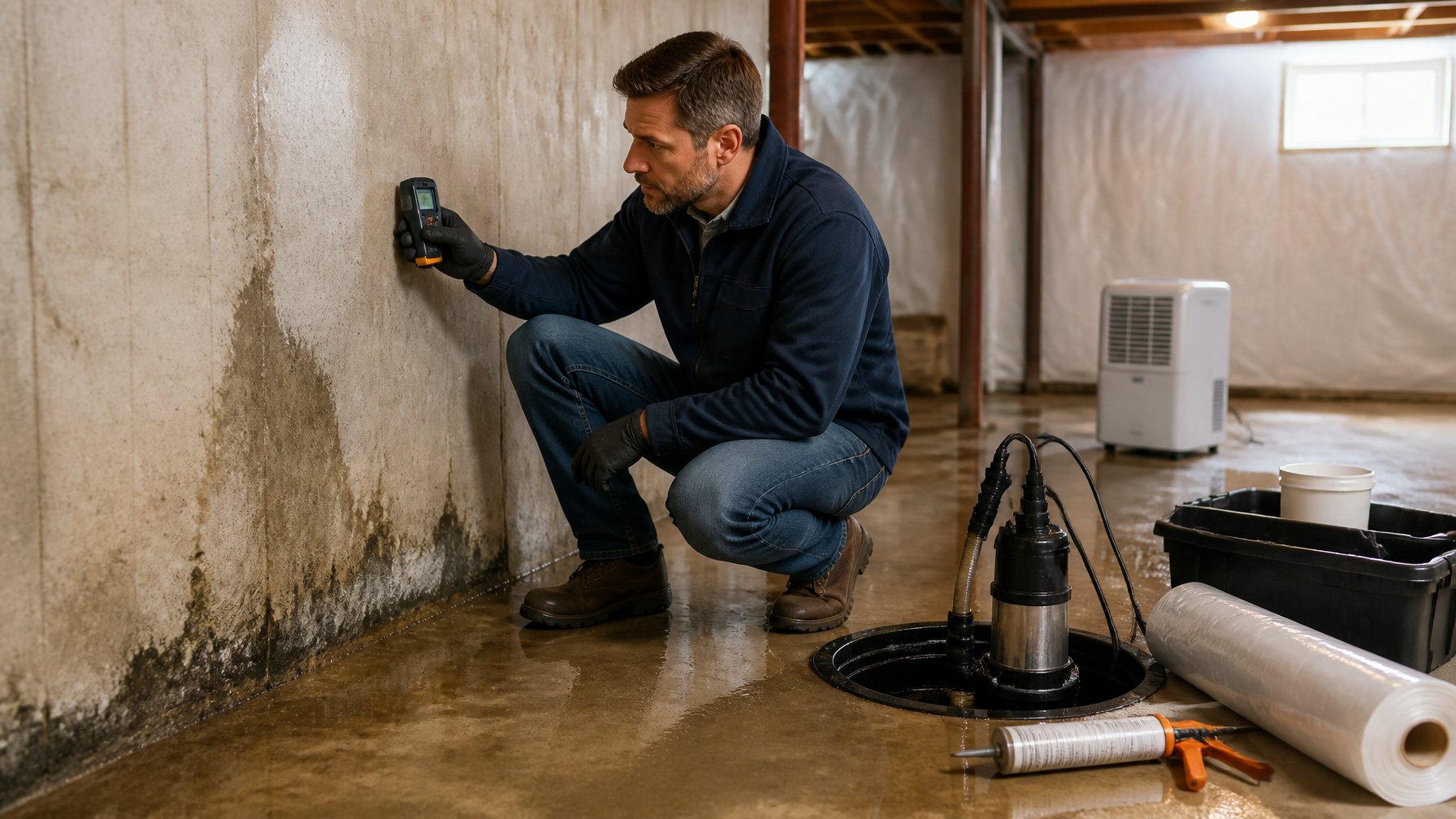
It shows which issues affect long-term value and comfort, and what to compare when choosing repairs or products. You will learn how to inspect walls, manage water at the foundation, and pick between interior and exterior solutions so finishing plans stay dry and useful.
1) Inspect foundation walls for cracks and mortar gaps
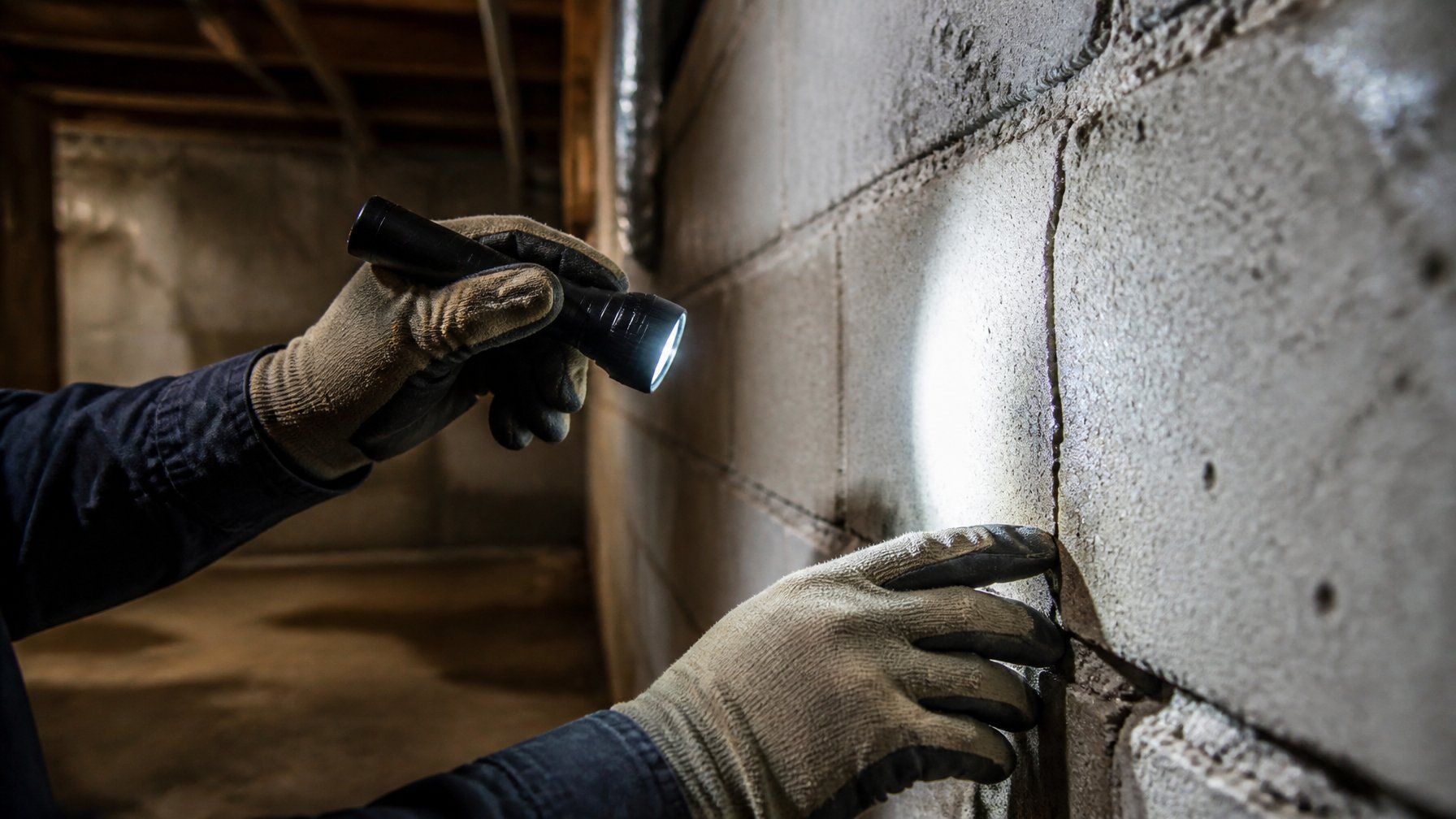
They should check foundation walls for cracks, hairline gaps, and missing mortar where blocks or bricks meet. Compare the size and direction of cracks; vertical hairline cracks often need simple monitoring while wider or horizontal cracks may need a pro.
Ask whether cracks go from inside to outside and if water stains or efflorescence appear. A clear tradeoff exists between DIY sealants for small gaps and hiring a foundation contractor for larger repairs. Homeowners can learn more about waterproofing options at /waterproofing.
Take photos and measure crack width with a ruler to track change over time. Bring those notes to a contractor if the gap widens more than 1/8 inch or if water flows through during heavy rain.
2) Install an interior perimeter French drain and sump pump (e.g., Zoeller M53)
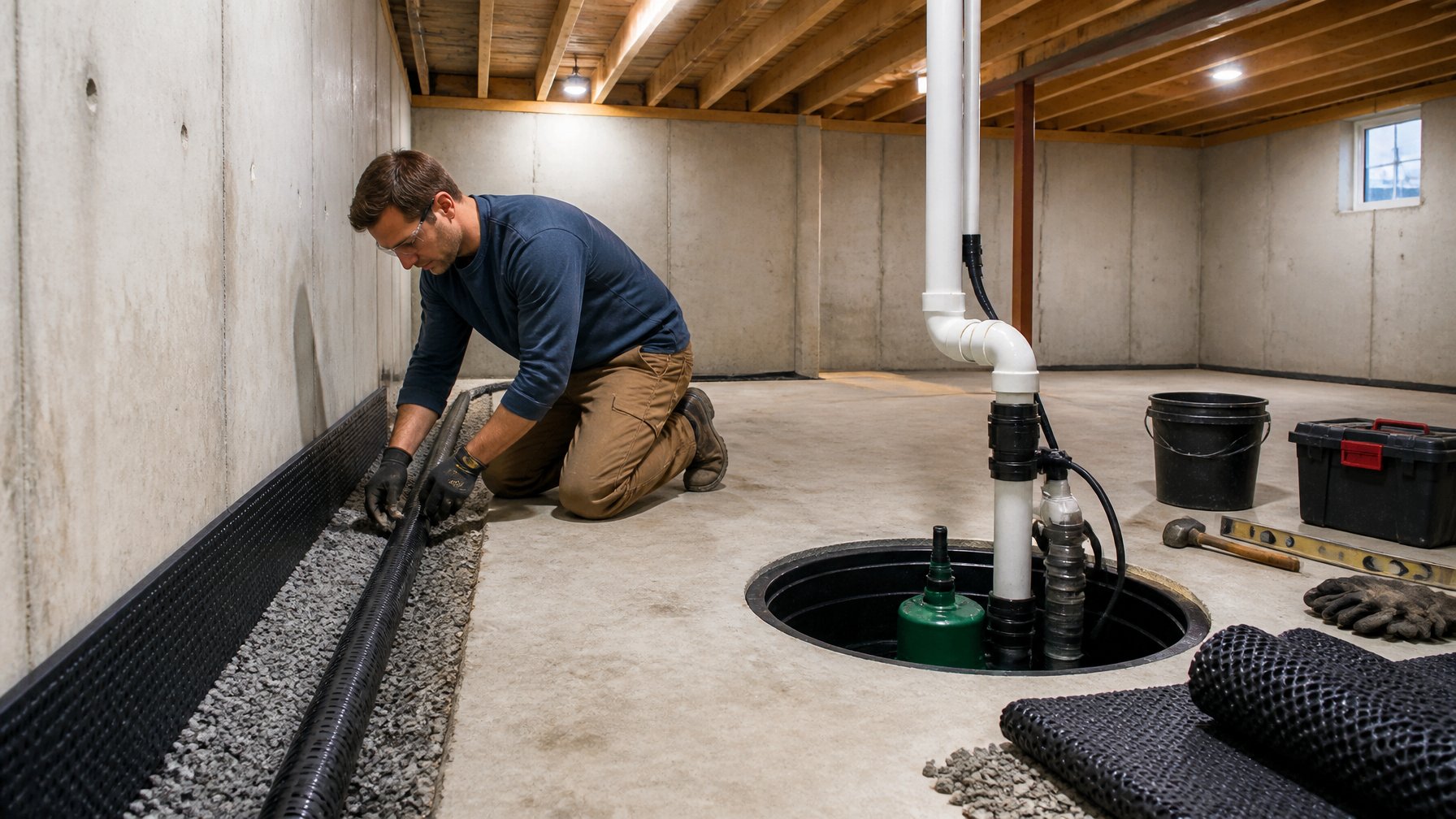
An interior perimeter French drain collects water that seeps through foundation walls and directs it to a sump. Homeowners should compare pipe diameter, gravel depth, and whether a pre-sloped channel is included. Ask if the installer will cut a shallow trench along the footer and tie into an existing drain or create a new sump pit.
Pick a reliable pump like the Zoeller M53 and compare horsepower, float-switch type, and backup power options. Ask about battery or water-powered backups and how often the pump needs testing. Trade off quieter models for ones with easier service access.
Confirm the installer’s plan for discharge plumbing and frost protection where water leaves the foundation. They should explain where the water will go and whether a check valve or alarm is included. See basement waterproofing for related services and options.
3) Apply masonry waterproofing sealer (e.g., Drylok Extreme)

They should pick a high-quality masonry sealer rated for below-grade use and vapor control. Compare coverage per gallon, drying time, and VOC levels, and ask whether the product bonds to damp masonry or needs a damp-free surface.
Prep matters. They must clean walls, remove efflorescence, and repair cracks with hydraulic cement first. A masonry brush or roller works best for uneven block or poured concrete.
Apply two coats for most products, brushing into pores for better adhesion. Check the product label for recoat times and temperature limits before starting.
Consider tradeoffs: some sealers block water but not hydrostatic pressure. For heavy seepage, they should pair sealing with exterior drainage fixes. Visit basement waterproofing services to learn more.
4) Improve exterior grading away from foundation
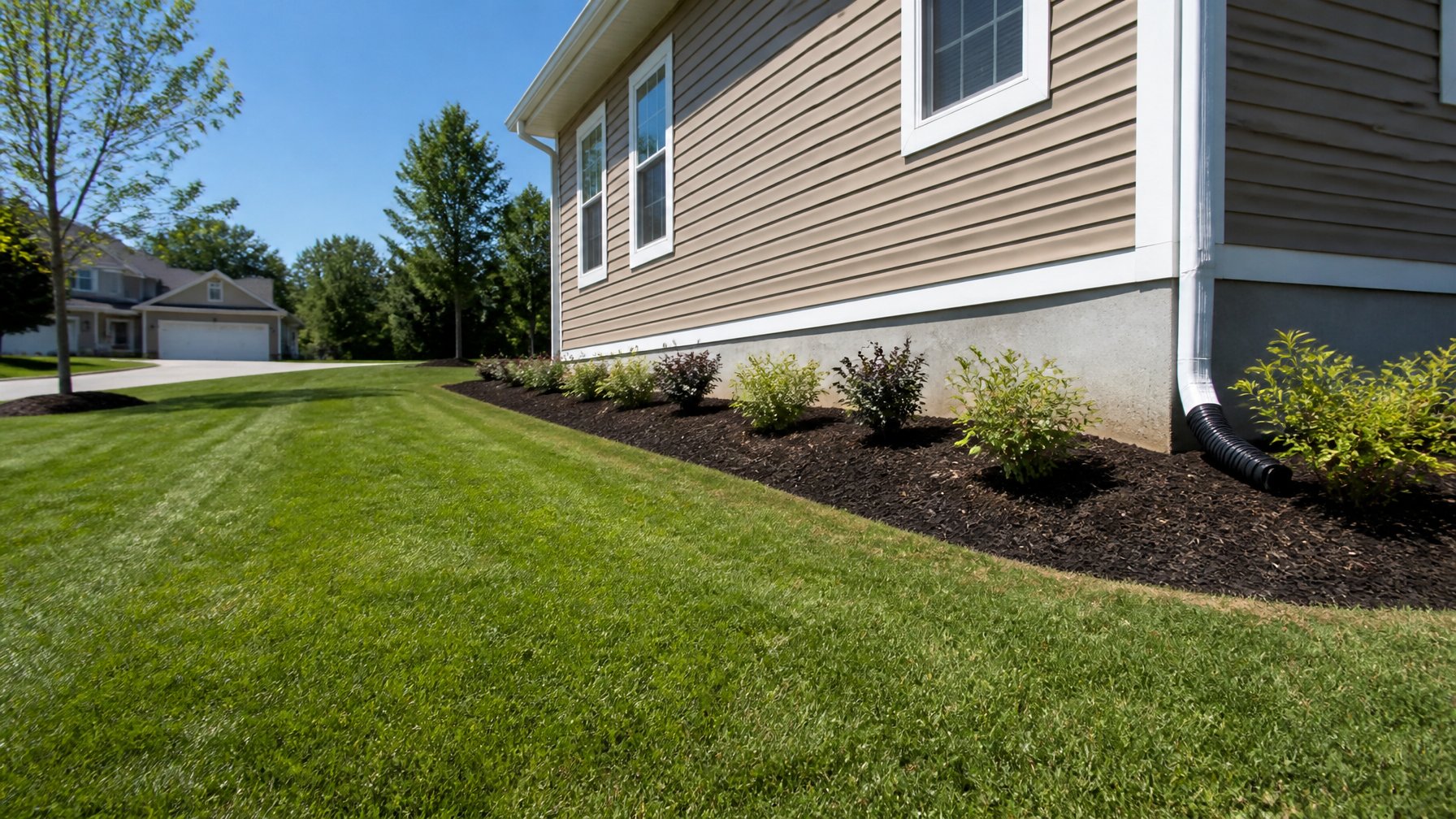
It should slope away from the foundation at least 6 inches over the first 10 feet. Homeowners can measure with a tape and a level or use a line level across stakes. Compare several spots around the house to find low areas where water pools.
If grading needs work, ask whether to use soil or a mix with coarse sand for better drainage. They should weigh cost and permanence: soil is cheaper but may settle, while compacted fill holds shape longer.
Downspouts must extend several feet from the foundation. They can add rigid extensions or underground drains; compare ease of installation and maintenance. For more guidance, see basement waterproofing services.
5) Clean and test existing gutters and extend downspouts away from house
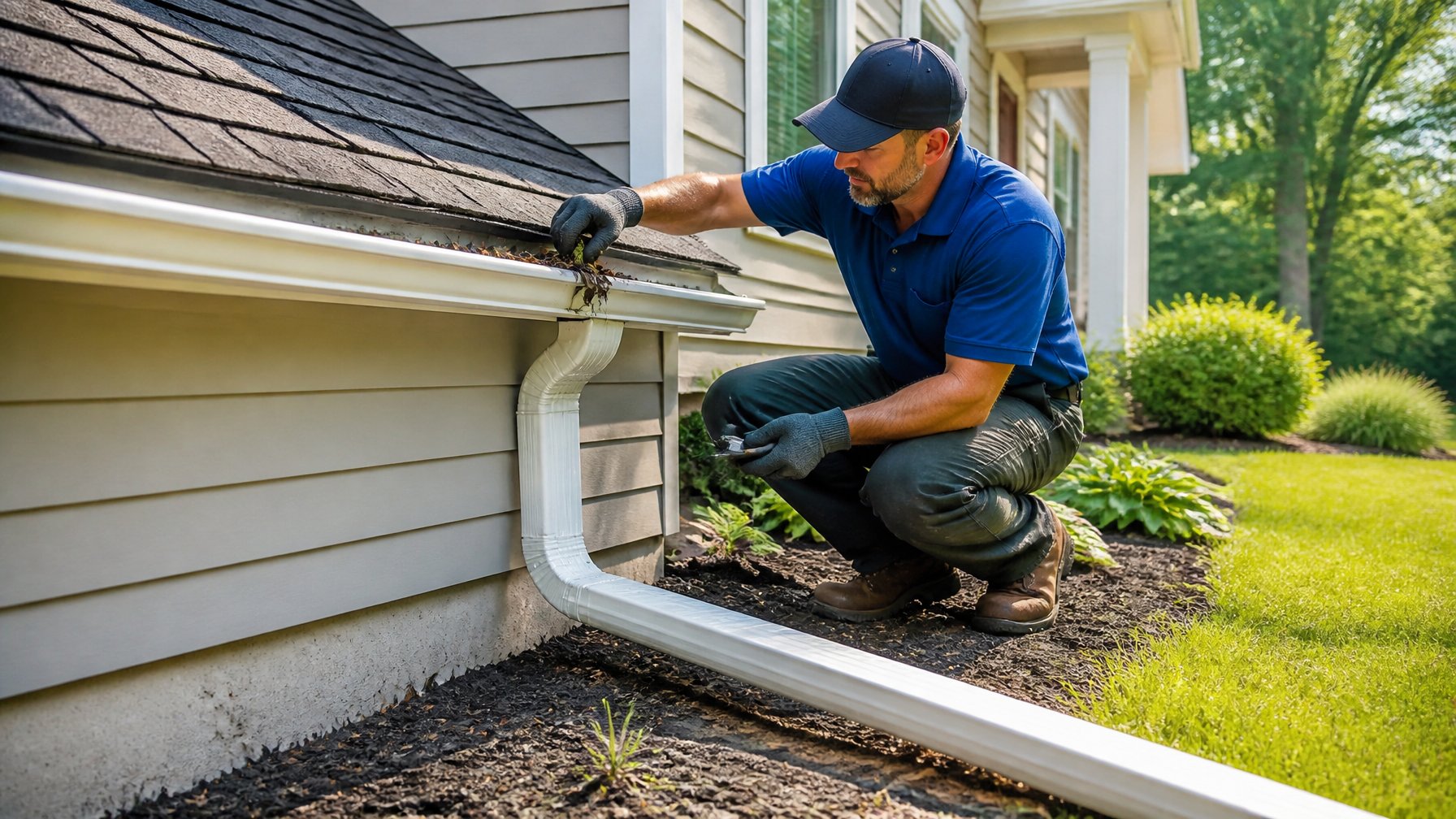
They should remove leaves and debris from gutters and check for leaks or sagging. Compare gutter condition to the cost of repair versus full replacement and ask if seamless gutters would cut future maintenance.
They should run a hose at the roofline to test flow and watch for overflow or basement seepage. Note where water pools and measure how far downspouts discharge — 6 feet or more is better.
They should extend downspouts with solid pipe or splash blocks to move water away from the foundation. Weigh the tradeoff between buried extensions that look neat and above-ground pipes that are easier to inspect and clean.
For guidance on hiring help or DIY steps, homeowners can visit the basement waterproofing service page. All images should show realistic home-improvement work like gutter cleaning and downspout extensions.
6) Install a dehumidifier rated for basements (e.g., Aprilaire 1850)
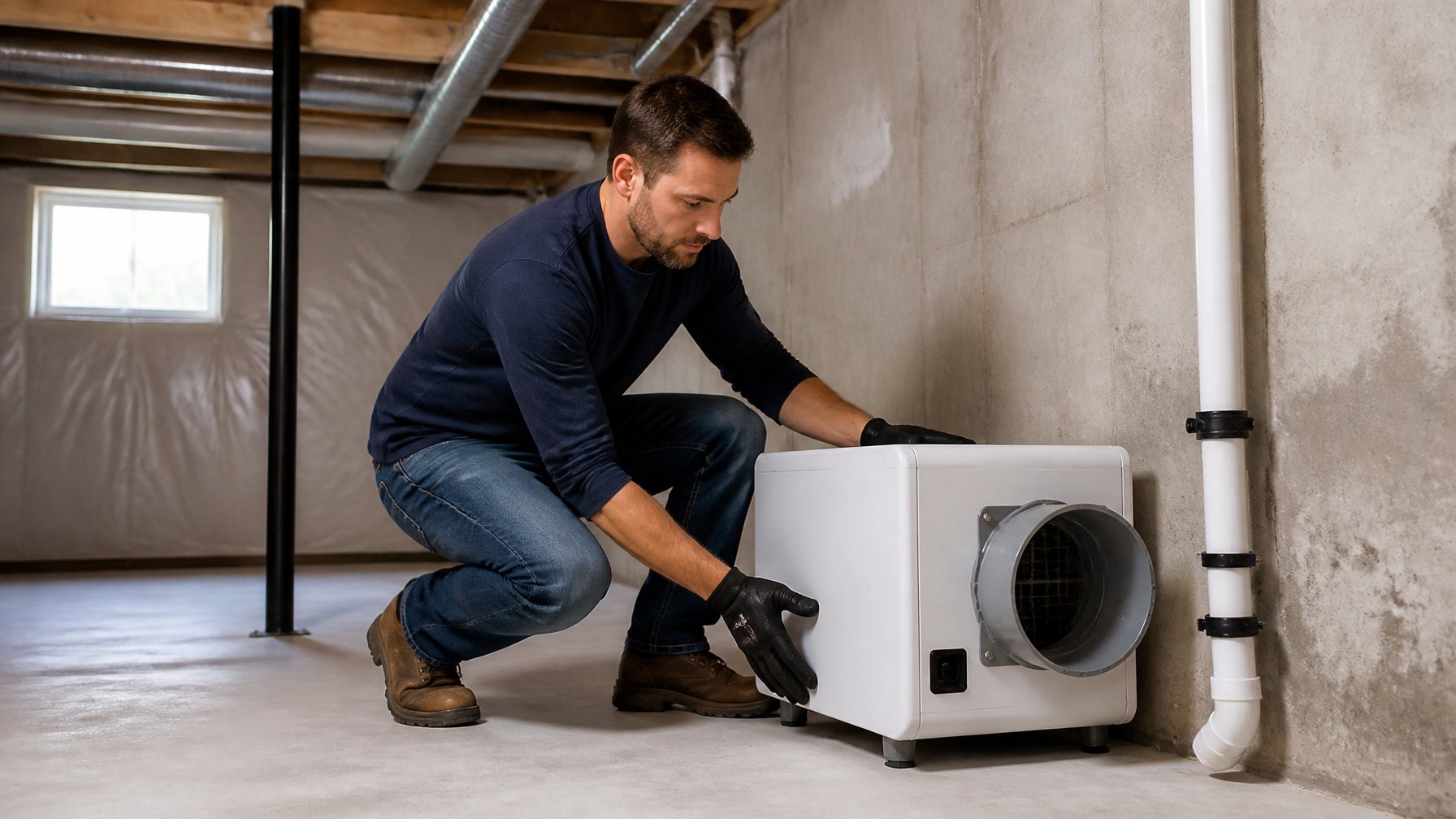
They should pick a unit sized for their basement square footage and expected humidity load. Compare pint-per-day capacity, energy use, and whether it drains to a pump, floor drain, or gravity line.
Ask about automatic humidistat control and continuous drainage options. A model like the Aprilaire 1850 has whole-basement capacity; smaller portable units may be cheaper but need more emptying.
Weigh upfront cost vs. long-term energy and maintenance. Check noise level and ease of filter changes, and confirm the unit fits the planned finished space.
For installation, ask if ducting to a central return makes sense or if a single-room placement will work. See basement waterproofing for related services and to coordinate moisture control with any drainage fixes.
7) Replace or repair damaged window wells and install sealed egress windows
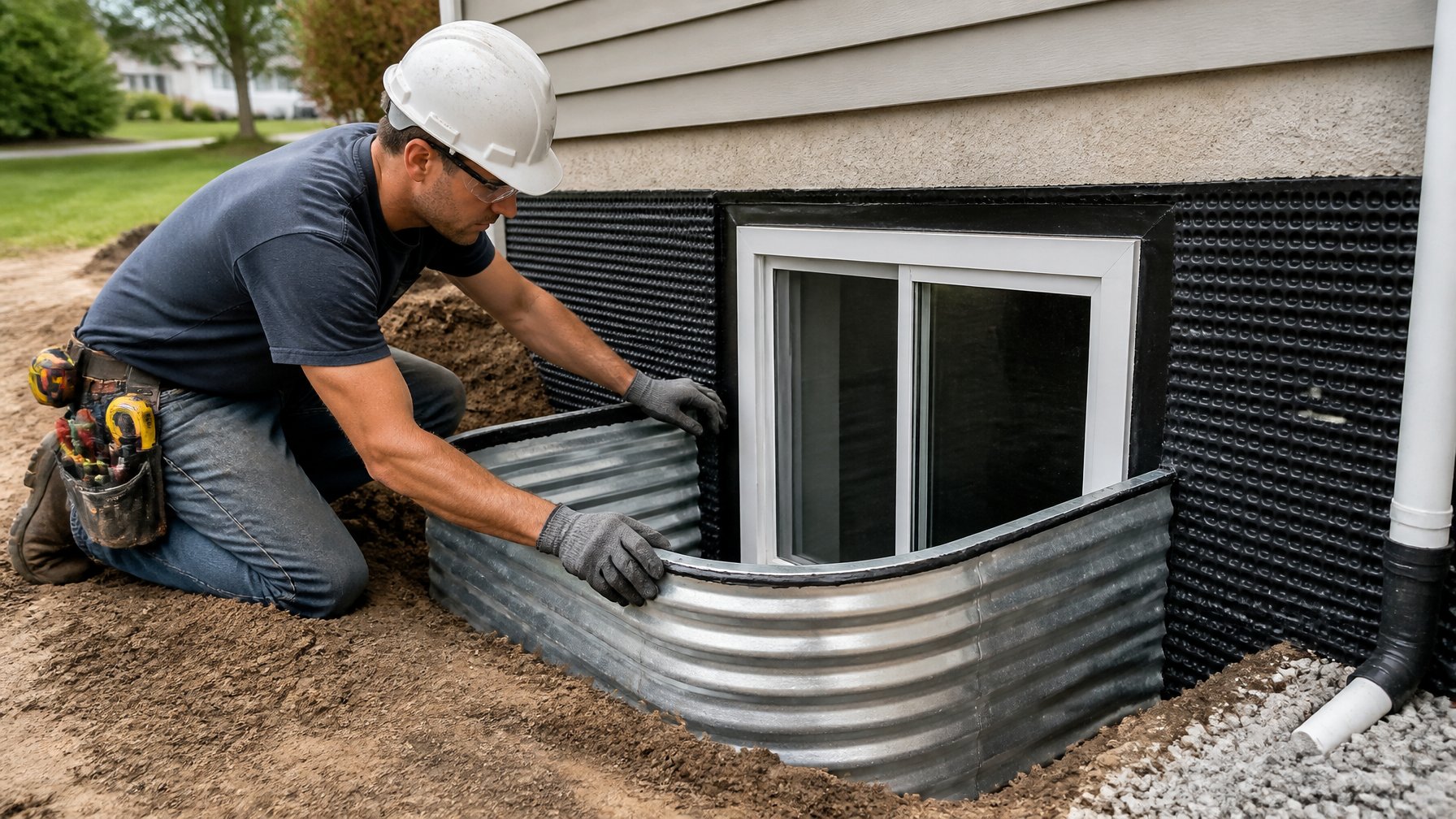
Damaged window wells let water pool next to basement windows. Homeowners should check for rust, cracks, and poor drainage and compare metal versus polymer wells for durability and cost. Ask if the well has a drain that ties into the footing drain or sewer, and weigh the tradeoff between cheaper replacement wells and investing in a drained, sealed system.
Egress windows must seal against water and meet code for escape. Compare single-pane vs. double-pane insulated units and ask about sealed, weathertight frames and proper flashing. They should also confirm the well depth and size meet escape rules and whether adding a drain or cover is needed.
For larger projects, homeowners can get bids that list materials, flashing, and drain connections. Look for estimates that explain labor, permit needs, and whether the installer will test for leaks after work. See basement waterproofing for more information.
8) Seal rim joists with closed-cell spray foam or GacoFlex Pro elastomeric sealant
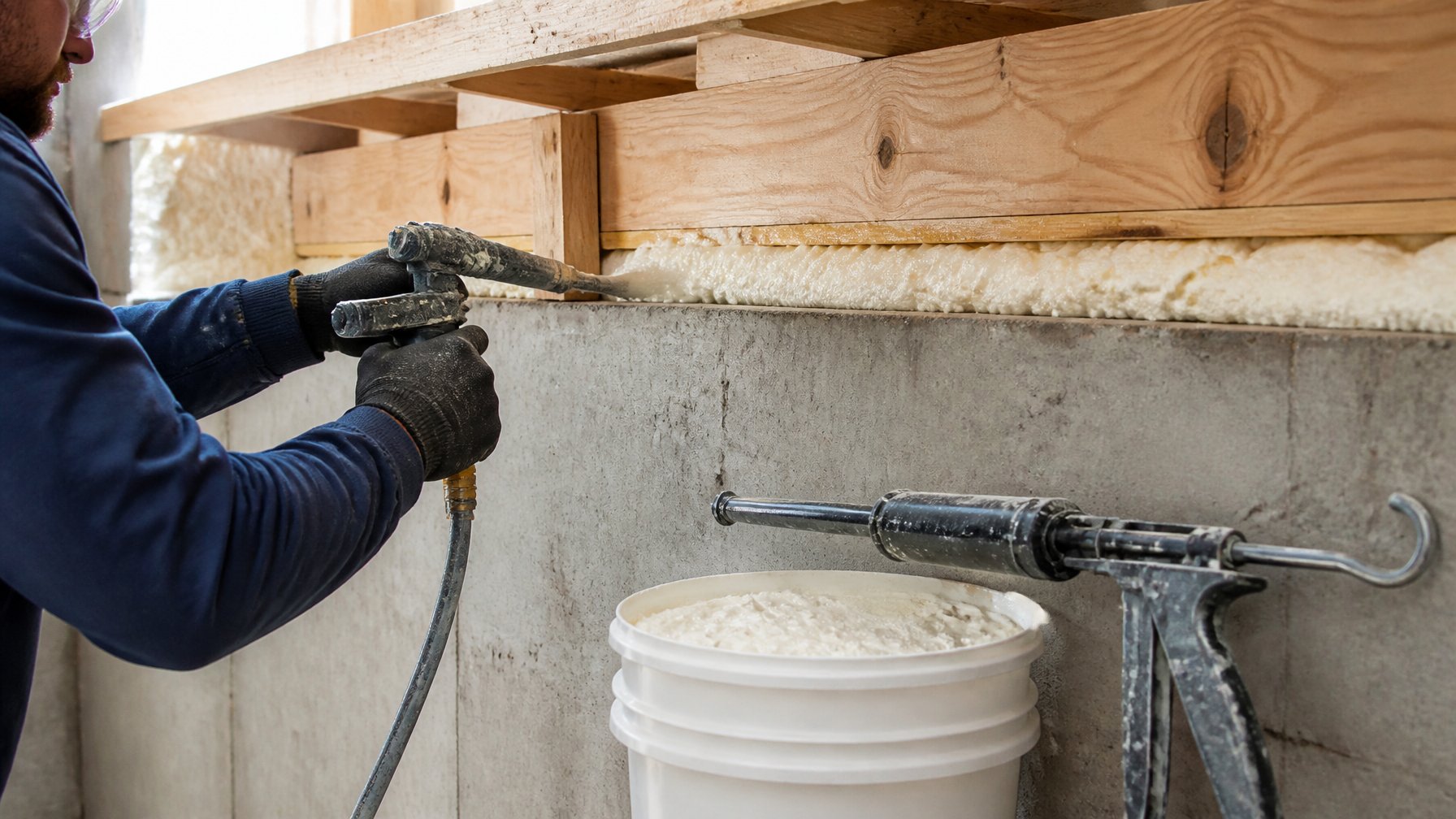
They should seal rim joists to stop drafts and moisture where the foundation meets the house. Compare closed-cell spray foam versus GacoFlex Pro elastomeric sealant for R-value, moisture resistance, and cost; spray foam adds insulation and air sealing, while elastomeric is cheaper and stays flexible.
Ask contractors about prep: removing old insulation, cleaning wood, and masking framing. Tradeoffs include cure time, fumes, and how neat the finish must be for visible basements.
Choose a contractor or DIY kit based on access and comfort with spray equipment. For more guidance on basement moisture control and related services, see basement waterproofing.
9) Check and repair plumbing leaks (supply lines, drains, water heaters)
They should inspect visible supply lines, drain pipes, and the water heater for drips, corrosion, or wet spots. Compare pipe material and age; ask if copper, PEX, or galvanized needs different repair costs and longevity.
They should run fixtures and watch for slow drains or gurgling sounds that point to leaks in hidden areas. Ask a plumber to perform a pressure test and compare the cost of spot repairs versus replacing sections of old piping.
They should check the water heater for rust, puddles, or a leaking pressure relief valve. Consider tradeoffs: a new tank may cost more upfront but reduces risk of a major basement flood.
See the homepage for more resources on basement waterproofing and professional plumbing services.